

Flooring for Garages: The Ultimate Guide
When it comes to garage flooring, finding the right solution can make a significant difference in terms of durability, aesthetics and functionality. At Puzzlink, we specialise in manufacturing PVC interlocking floor tiles, a versatile option for both commercial and domestic spaces. In this comprehensive guide, we will explore the benefits of PVC tiles and why they are an excellent choice for garage flooring.
Why Choose PVC Interlocking Floor Tiles for Your Garage?
Durability and Strength
Garages are high-traffic areas that require flooring that can withstand heavy use. PVC interlocking floor tiles are designed to be highly durable, capable of bearing the weight of vehicles and heavy equipment. Their robust construction ensures they are resistant to cracks, chips and other damage commonly seen with traditional concrete floors.
Easy Installation
One of the standout features of PVC interlocking floor tiles is their ease of installation. The tiles simply snap together without the need for adhesives, nails or screws. This makes them an excellent DIY project for homeowners looking to upgrade their garage flooring without professional help. Additionally, if a tile gets damaged, it can be easily replaced without disturbing the rest of the floor.
Low Maintenance
PVC floor tiles are exceptionally low-maintenance. They are resistant to stains, chemicals and oils, which are common in garage environments. Cleaning is straightforward – a simple mop with mild detergent is usually sufficient to keep the floor looking pristine. This ease of maintenance ensures that your garage remains functional and attractive with minimal effort.
Safety Features
Safety is paramount in any space, and garages are no exception. PVC interlocking floor tiles provide a non-slip surface, reducing the risk of accidents, especially in wet conditions. The tiles also offer a comfortable underfoot feel, which can be beneficial when spending long hours in the garage.
Aesthetic Appeal
Beyond functionality, PVC interlocking tiles offer a wide range of colours and designs. This allows you to customise your garage floor to match your style preferences. Whether you prefer a sleek, modern look or a more industrial feel, there are options available to suit your taste.
How to Choose the Right Flooring for Your Garage
Assess Your Needs
Before selecting your garage flooring, consider the primary use of the space. Will it be used primarily for parking vehicles, as a workshop or for storage? Understanding your needs will help you choose the right type of tile and design.
Consider the Load
Evaluate the load-bearing capacity required for your garage floor. For standard vehicle parking, most PVC tiles will suffice. However, if you plan to store heavy machinery or use the space for intense activities, opt for Puzzlink, more robust tiles. Our tiles have been tested to withstand forklift use and plastic injection moulding tooling (10T).
Temperature and Environment
Garages can experience extreme temperature fluctuations. Ensure that the PVC tiles you choose are designed to handle varying temperatures without expanding or contracting excessively. Puzzlink tiles, for example, are engineered to remain stable in diverse conditions, making them ideal for UK garages.
Installation and Maintenance
Consider the installation process and the level of maintenance you are willing to undertake. As mentioned, PVC interlocking tiles are easy to install and maintain, making them a convenient choice for most homeowners.
Garage Floor Preparation
Proper preparation of the garage floor surface is crucial for a successful and long-lasting installation of PVC tiles. Here are the steps to follow:
1. Cleaning and Degreasing: Thoroughly clean the floor to remove any dirt, grease, or debris. Use a degreasing solution or a strong detergent to ensure the surface is free from contaminants that could interfere with the tile adhesion.
2. Repairing Cracks and Uneven Surfaces: Inspect the floor for any cracks or uneven areas. These should be repaired using a suitable concrete patching compound or floor levelling compound to create a smooth, even surface for the tiles.
3. Moisture Barrier or Primer: Depending on the condition of the concrete floor, you may need to apply a moisture barrier or primer before installing the tiles. This will help prevent moisture from seeping through and damaging the tiles over time.
Proper preparation not only ensures a successful installation but also extends the lifespan of your PVC garage floor tiles.
Maintenance and Care Tips
PVC interlocking floor tiles are designed to be low-maintenance, but following a few simple care tips can help keep them looking their best for years to come:
1. Regular Cleaning: Sweep or vacuum the floor regularly to remove loose dirt and debris. For a deeper clean, mop the tiles using a mild detergent or a pH-neutral floor cleaner specifically formulated for PVC floors.
2. Stain Removal: For stubborn stains or spills, use a diluted solution of warm water and a mild detergent. Avoid using harsh chemicals or abrasive cleaners, as they can damage the tile surface.
3. Protecting from Damage: Place mats or rugs in high-traffic areas to prevent scratches or dents from heavy objects. Avoid dragging furniture or equipment across the tiles, as this can cause scuffs or gouges.
4. Maintenance Schedule: Establish a regular maintenance schedule to ensure your garage floor tiles remain in top condition. This may include deep cleaning, inspecting for any damage, and making necessary repairs or replacements.
By following these simple maintenance and care tips, you can extend the lifespan of your PVC garage floor tiles and keep them looking their best for years to come.
Design and Customisation Options
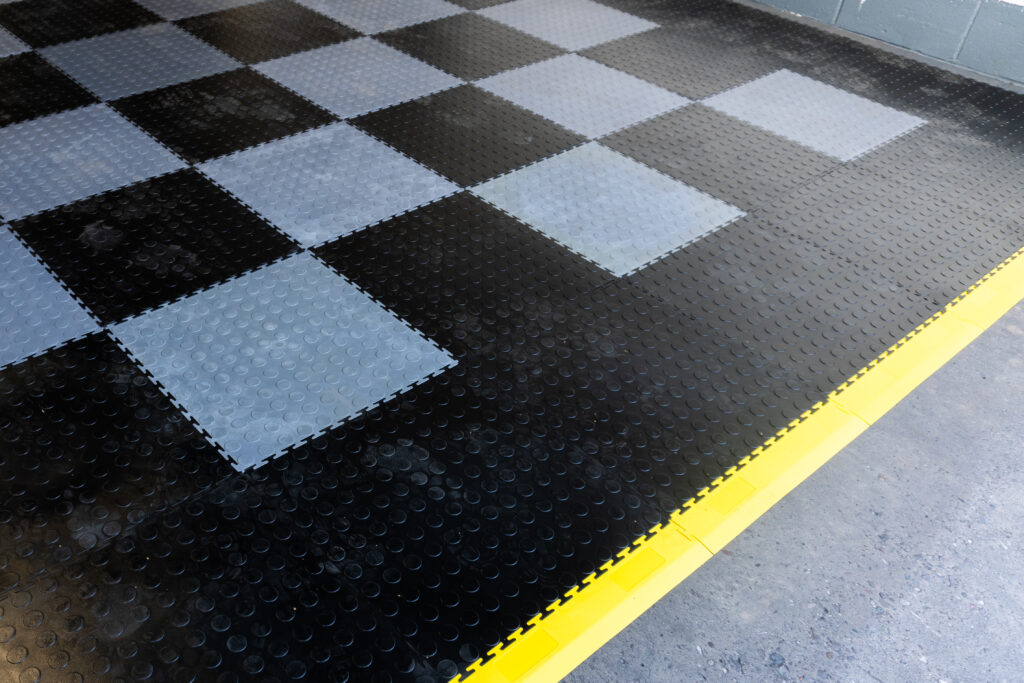
One of the advantages of PVC interlocking floor tiles is the wide range of design and customisation options available. With a variety of colours, patterns, and textures to choose from, you can create a unique and personalised look for your garage floor.
Colour Choices and Patterns: PVC tiles are available in a range of solid colours, from classic neutrals like grey and beige to bold shades like red and blue. You can also find tiles with patterns or textures, such as wood grain or diamond plate designs, to add visual interest to your garage floor.
Mixing and Matching: Don’t be afraid to mix and match different tile designs to create a custom look. For example, you could use a solid colour for the main floor area and incorporate a contrasting border or accent tiles in a different colour or pattern.
Incorporating Logos or Graphics: If you want to add a personal touch or showcase your brand, many manufacturers offer the option to incorporate logos or graphics into the tile design. This can be a great way to make your garage floor truly unique.
When considering design options, it’s important to think about the overall aesthetic you want to achieve and how the floor will complement the rest of your garage space. High-quality images or renderings can help you visualise different design possibilities before making a final decision.
Cost Comparison and Return on Investment
While PVC interlocking floor tiles may have a higher upfront cost compared to some other garage flooring options, they offer excellent value and potential return on investment in the long run.
Cost Comparison:
– Epoxy Coatings: Epoxy coatings can be a more affordable option initially, but they require professional installation and may need to be reapplied every few years, increasing long-term costs.
– Traditional Concrete: Bare concrete floors are inexpensive but lack durability, aesthetics and functionality.
– Interlocking PVC Tiles: While the initial cost may be higher, PVC tiles are a long-lasting and low-maintenance solution that can provide value for years to come.
Return on Investment (ROI):
Installing high-quality PVC garage floor tiles can increase the value of your home and potentially provide a good return on investment if you plan to sell in the future. A well-designed and maintained garage floor can be a selling point for potential buyers, as it adds functionality and aesthetic appeal to the space.
Additionally, the durability and low maintenance requirements of PVC tiles can save you money in the long run by eliminating the need for frequent repairs or replacements.
When considering the cost of garage flooring, it’s important to factor in not only the initial investment but also the long-term maintenance and potential replacement costs. PVC interlocking tiles offer a balance of upfront cost and long-term value, making them a smart investment for many homeowners.
Installation Tips and Troubleshooting
While PVC interlocking floor tiles are designed for easy installation, following the proper steps and addressing any potential issues can ensure a successful and long-lasting result.
Installation Tips:
1. Plan the Layout: Measure your garage floor and plan the tile layout before starting the installation. Begin at the centre of the room and work your way outwards to ensure an even appearance.
2. Snap Tiles Together: Follow the manufacturer’s instructions for snapping the tiles together securely. Ensure each tile is locked in place to avoid gaps or an unstable surface.
3. Trim Edges: Use a utility knife or tile cutter to trim tiles as needed to fit around corners, walls, or obstacles. Measure twice before cutting to ensure accuracy.
4. Stagger Seams: For a more seamless look, stagger the seams between tiles rather than aligning them in a grid pattern.
5. Use Ramps or Transitions: If transitioning from the garage floor to another surface, use appropriate ramps or transition strips to create a smooth and safe transition.
Troubleshooting:
– Gaps or Loose Tiles: If you notice gaps or loose tiles after installation, check that the tiles are properly locked together. You may need to disassemble and reinstall the affected area.
– Expansion or Contraction: PVC tiles can expand or contract slightly with temperature changes. Leave a small expansion gap around the perimeter of the room to accommodate this.
– Moisture Issues: If you notice moisture or condensation under the tiles, it may indicate a need for a moisture barrier or better ventilation in the garage.
– Stains or Discoloration: Promptly clean any spills or stains to prevent them from setting in. For stubborn discoloration, consult the manufacturer’s recommended cleaning methods.
By following these installation tips and addressing any potential issues promptly, you can ensure a successful and long-lasting installation of your PVC garage floor tiles.
Conclusion
Choosing the right flooring for your garage can transform the space, making it more functional, safe and visually appealing. PVC interlocking floor tiles from Puzzlink offer an ideal solution, combining durability, easy installation and low maintenance. By considering your specific needs, exploring design options, and following our installation tips, you can achieve a garage floor that meets your expectations and enhances the overall value of your home.


Get in Touch
Recent Posts
- Garage Floor Tiles vs Epoxy Coatings: Which Is Better for UK Garages? (2026 Guide)
- Recycled vs Virgin PVC Garage Floor Tiles: Which Should You Choose?
- How Much Do Garage Floor Tiles Cost in the UK? (Single & Double Garage Guide)
- Best Garage Flooring Options in the UK – Recycled PVC Tiles Explained
- What to Know Before Buying Garage Floor Tiles in the UK